
Picture Source: (Ending the Epedimic, 2020)
I have weakness in my heart for all things Portuguese. I lived in Brazil for two and a half years as a teenager and also had friends from Portugal growing up. But when someone in my Healthcare Management and Leadership cohort suggested I look at Portugal as a model for Substance Use Disorder, I was skeptical. Portugal is not exactly in the global news. Still, curiosity got the best of me and I started researching. It turns out Portugal’s approach to treating substance use disorders champions a multidisciplinary medical and judicial approach, stigma-free care, and support that addresses the social determinants of health.
Social Determinants of Health are defined by the CDC as, “Conditions in the places where people live, learn, work, and play affect a wide range of health risks and outcomes” (2018). They include anything that can impact health such as access to nutritious foods and resources, education and work opportunities, the environment of the community. These determinants are not addressed in the mainstream U.S. healthcare system.

In the 1990’s 1% of Portugal’s population was addicted to heroin. Portugal decided to tackle the problem differently. In 2001, it decriminalized drug use and declared it a medical issue not a crime. Portuguese society overwhelming supported the move because ultimately everyone knew someone who was struggling with substance addiction. Drug dealers are still punished through the court system, but users carrying below a certain amount are not left cycling through the Portuguese judicial system. Instead, they are advised by a social worker on what their treatment options are. Stigma around drug use has disappeared. Vans with Methadone dosage, a powerful Opioid drug meant to decrease Heroin use, drive daily into known drug areas to provide dosage. Healthcare workers provide drug users clean needles and condoms. This has reduced the drug-related HIV infections in Portugal by 95% (Frayer, 2017).

Once a person has met with social workers and the treatment committee, they are given a path to healing that is holistic in nature. The Portuguese Public Healthcare system offers them an integrated approach to treating physical, psychological, and social needs all in one location. This medical-social model won’t work for everyone. For those not ready to stop the cycle of substance use disorder, the model emphasizes harm reduction instead. Psychologists, nurses, social workers go to the streets to meet with drug users, hand them resources, provide information on shelters, hospitals, and speak to them about treatment centers. No judgment, just solutions. Other mobile groups that administer methadone have doctors, nurses, and a position called a psychologist tech. This role is not a board certified position, instead these team members are skilled in providing information on safer sex practices and cleaner drug use. The mobile medical team also provides free screening for infectious diseases and mental illness. They provide education about health, wellness, and community resources. This whole person approach is 100% based on relationship-building, getting to know each individual user, and meeting them where they are at (Clay, 2018).
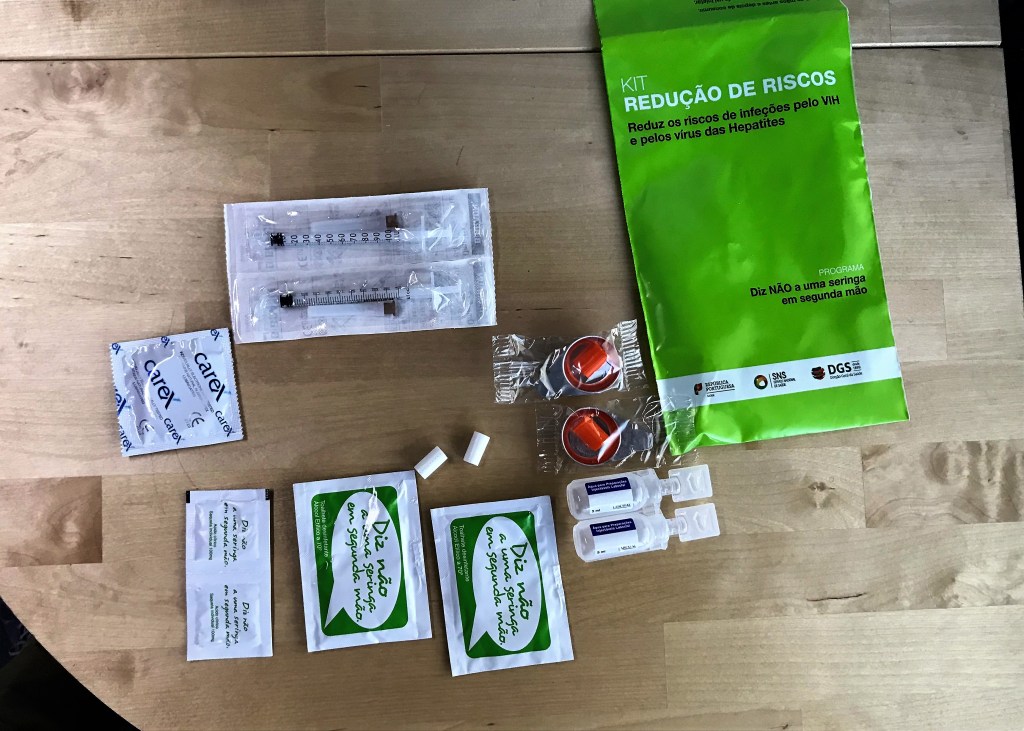
Portugal’s substance abuse disorder treatment model has reduced heroin addictions from 100,000 in the 1990’s to 25,000 today (Clay, 2018). This program is impressive because it starts with acceptance and then moves on to empowerment. It’s not a one-size-fits-all approach. Portugal plans to expend the program to rural areas through a series of e-learning and training sessions. Other countries are taking notice too and turning to Portugal to learn and understand how they can follow the same model. “Muito bom” (very good) Portugal, and thank you for paving the way to compassionate care for individuals with substance use disorders.
Sources
Clay, R. (2018, October). Retrieved January 31, 2020, from https://www.apa.org/monitor/2018/10/portugal-opioid
Frayer, L. (2017, April 18). In Portugal, Drug Use Is Treated As A Medical Issue, Not A Crime. Retrieved January 31, 2020, from https://www.npr.org/sections/parallels/2017/04/18/524380027/in-portugal-drug-use-is-treated-as-a-medical-issue-not-a-crime

 Alexa's Global Health Blog
1 Comment