This article analyzes what the U.S. can learn from other countries’ approach to treating Substance Use Disorder. These lessons learned can help us as we move forward to solve the U.S. crisis.

This article analyzes what the U.S. can learn from other countries’ approach to treating Substance Use Disorder. These lessons learned can help us as we move forward to solve the U.S. crisis.

8.5 million SUD patients, or 6% of Russian population, in 2013 were not getting the treatment they deserved. No doubt that by now that number has increased. This is a humanitarian crisis.

Analyzing the U.S, Russia, France, and Portugal’s approach to Substance Use Disorder treatment Programs.

Stigma is a barrier for Opioid Use Treatment programs. We will not solve the Opioid Crisis until we educate our healthcare workforce in empathetic-compassionate communication, population-specific deescalation, and self-awareness of perceptions and biases.

When it comes to solving the Opioid Crisis Colorado is progressive and innovative. Its approach is multidisciplinary, takes into account the social determinants of health, provides a structured and dynamic approach to family support, improves access to care, educates medical professionals on Opioid use reduction, and campaigns to reduce stigma in healthcare and the community.

Graphics to visualize the U.S. Opioid Crisis
This short video explains the biological mechanism of Opioid addiction Source National Geographics. (2017, November 23). This Is What Happens … More
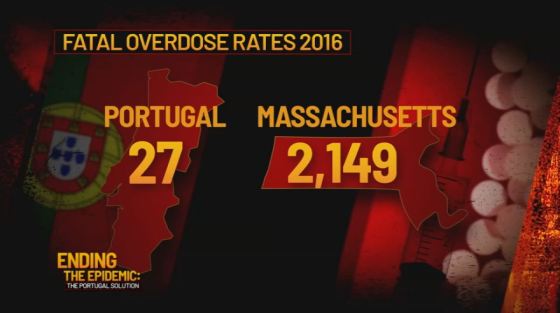
Portugal’s approach to treating substance use disorders champions a multidisciplinary medical and judicial approach, stigma-free care, and support that addresses the social determinants of health.

In contrast to the U.S., France places no restrictions on medical doctors prescribing Buprenorphine, no matter their specialty. No additional education is required because it is treated just like any other medicine. This means that primary care doctors can be a resource for patients with substance use disorders, even those in remote locations.

Opioid Use Disorder falls under the classification of NonCommunicable Diseases. This epidemic started from the misuse of prescription Opioids. The numbers are staggering. Where are we at in the U.S. and what can be done?
 Alexa's Global Health Blog